
How to Start a Women's Circle: A Step-by-Step Guide

The first Women's Circle I ever sat in changed the course of my life.
I didn't know what to expect. I remember walking into a room of strangers, feeling that familiar pull of wanting to connect but not quite knowing how. By the time we closed that Circle two hours later, something had shifted in me — a feeling of being truly seen by other women, without performance or pretence.
That was more than ten years ago. Since then, I've facilitated over a hundred Women's Circles, trained facilitators around the world, and watched thousands of women experience that same moment of recognition: this is what I've been missing.
If you've felt that pull — if you've been wondering how to start a Women's Circle of your own — this guide will walk you through everything you need to know. No experience necessary. Just a willingness to hold space and a genuine desire for connection.
What Is a Women's Circle?
Before we dive into the practical steps, let's get clear on what a Women's Circle actually is — because it's probably simpler than you think.
A Women's Circle is a structured gathering where women come together in a safe and nurturing space to share, listen, and connect. It's not group therapy. It's not a book club. It's not a networking event. It's something older and more fundamental than any of those things — a practice of sitting together in honesty and presence.
Circles typically follow a simple format: an opening ritual to mark the beginning, a check-in round where each woman shares how she's arriving, a theme or activity for the main body, and a closing to bring the gathering to a gentle end.
The magic of Circle isn't in complicated facilitation techniques. It's in the container you create — a space where women feel safe enough to show up as they really are.
Why Women's Circles Matter Now More Than Ever
We're living through what researchers are calling a loneliness epidemic. Despite being more digitally connected than ever, many women report feeling deeply isolated — especially through major life transitions like motherhood, career changes, grief, or relocation.
Women's Circles offer something that social media and casual friendships often can't: the experience of being heard without being fixed, of sharing without being judged, and of belonging to something real.
Starting a Women's Circle isn't just a nice thing to do. It's a meaningful response to one of the biggest challenges of our time.
Step 1: Get Clear on Your Intention
Every Circle begins with intention. Before you think about logistics, ask yourself: why do I want to facilitate this Circle?
Your intention doesn't need to be grand. Maybe you've noticed that the women in your life are craving deeper connection. Maybe you want to create the space you wish you had during a difficult season. Maybe you simply feel called to bring women together.
Write your intention down. It will become the foundation of everything else — from who you invite to how you structure your gatherings.
Your intention will naturally attract the right women to your Circle.
Step 2: Choose Your Format
There's no single right way to run a Women's Circle. The format that works best depends on your intention, your community, and your own facilitation style.
How often will you meet? Monthly Circles are the most common starting point — frequent enough to build trust, spacious enough that women can commit.
How many women? I recommend starting with 6-10 women. Fewer than six can feel too intimate before trust is established. More than twelve makes it difficult for every woman to share meaningfully.
How long? Most Circles run between 90 minutes and two hours.
In person or online? Both work beautifully. In-person Circles have a particular warmth. But online Circles can reach women who might never have access to an in-person gathering.
Step 3: Create Your Space
The physical or virtual space you choose sends a message before you say a single word. It tells women: you are welcome here, and this matters.
For in-person Circles: Choose somewhere warm, private, and comfortable. Your living room works perfectly. Arrange seating in a circle. Place something meaningful in the centre: a candle, flowers, objects from nature. Keep the lighting soft.
For online Circles: Ask everyone to find a quiet, private space. Encourage cameras on (but never insist). You might invite each woman to light a candle at her end — it creates a surprisingly powerful sense of shared ritual even through a screen.
Step 4: Set Your Circle Agreements
Circle agreements are the invisible architecture of safety. They're what allow women to take the risk of being vulnerable with each other.
Confidentiality. What's shared in Circle stays in Circle. This is non-negotiable.
Listening without fixing. When a woman shares, we listen. We don't offer advice, solutions, or comparisons unless she specifically asks.
Speaking from "I". We share our own experience, not generalised advice.
Right to pass. No one is ever required to share. Silence is welcome in Circle.
Honouring time. We start and end when we say we will.
Read these aloud at the beginning and ask if everyone can agree. This simple act sets the tone for everything that follows.
Step 5: Plan Your First Gathering
Here's a simple structure you can use for your very first Circle.
Opening (10 minutes) — Welcome everyone. Light a candle to mark the beginning. Read your Circle agreements aloud.
Check-in round (20-30 minutes) — Go around the Circle and invite each woman to share how she's arriving tonight. As the facilitator, go first — it models vulnerability and sets the depth.
Theme exploration (30-40 minutes) — Choose one theme for the evening. Some ideas: What does connection mean to me? When do I feel most myself? What am I carrying that I'm ready to put down?
Closing (10 minutes) — Invite each woman to share one word about what she's taking away. Blow out the candle together. Thank everyone for showing up.
That's it. That's a Women's Circle.
Step 6: Invite Your Women
Now comes the part that feels most vulnerable for new facilitators: actually inviting people.
Start with women you already know — friends, colleagues, neighbours, fellow parents. Send a personal message explaining what you're creating and why. Be honest about the fact that this is new for you.
You don't need everyone to say yes. You need a handful of women who feel a genuine pull toward what you're offering.
Step 7: Trust the Process
Here's the truth that every Women's Circle facilitator discovers: you don't need to be perfect. You don't need to have all the answers. You don't need a degree in psychology or years of experience.
What you need is the willingness to hold a space where women feel safe, seen, and heard. The Circle itself does the rest.
I've seen brand new facilitators create extraordinary Circles simply because they showed up with an open heart and a genuine intention.
What Comes Next
Starting a Women's Circle is one of the most rewarding things you can do — for yourself and for the women who gather with you.
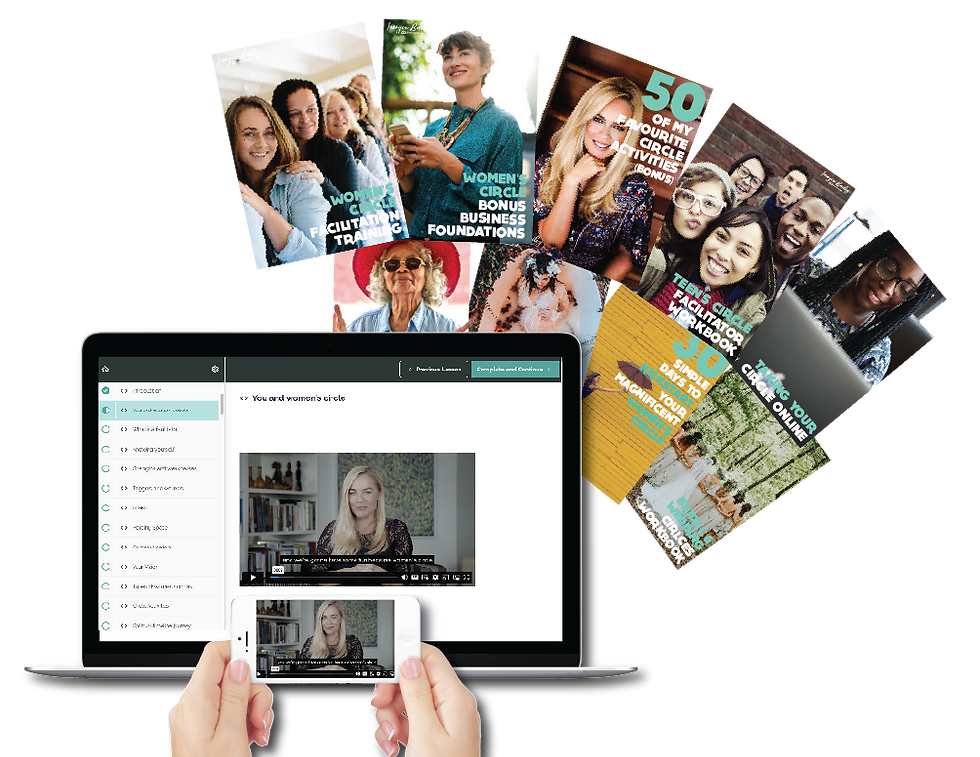
If you're feeling called to take this deeper — to build your facilitation skills, learn how to navigate challenging moments in Circle, and create a practice that could become your life's work — I'd love to support you.
You can download the free Connection Blueprint for a practical guide to building deeper relationships and hosting your first gathering. Or explore the Women's Circle Facilitator Certification to train with me and join a global community of facilitators.
The world needs more women holding space for other women. If that call resonates with you, trust it.
With love,
Imogen x


Comments